

Booking Guide
How to Book Melbourne Airport Parking
Pre-booking parking takes ten minutes and saves both money and stress — provided you have the right details in front of you. This guide walks through how online booking typically works at Melbourne Airport and what to have ready before you start.
Before You Open a Booking Page
Decide before you open a booking page
Know your entry and exit dates and times, your terminal, and roughly how long you are willing to spend on a transfer. That is enough to pick a category before you look at prices.
Booking pages are easier to use when you arrive with a shortlist rather than browsing every option while a countdown timer runs. Two minutes of thinking saves a lot of comparison later — and Melbourne airport parking has enough variety that walking in cold tends to mean paying more for a space you did not actually need.
If you are unsure which terminal you fly from, check your airline confirmation first. Tullamarine has four terminals, and the wrong one means a shuttle or a long walk across the precinct with luggage.
What you need to enter
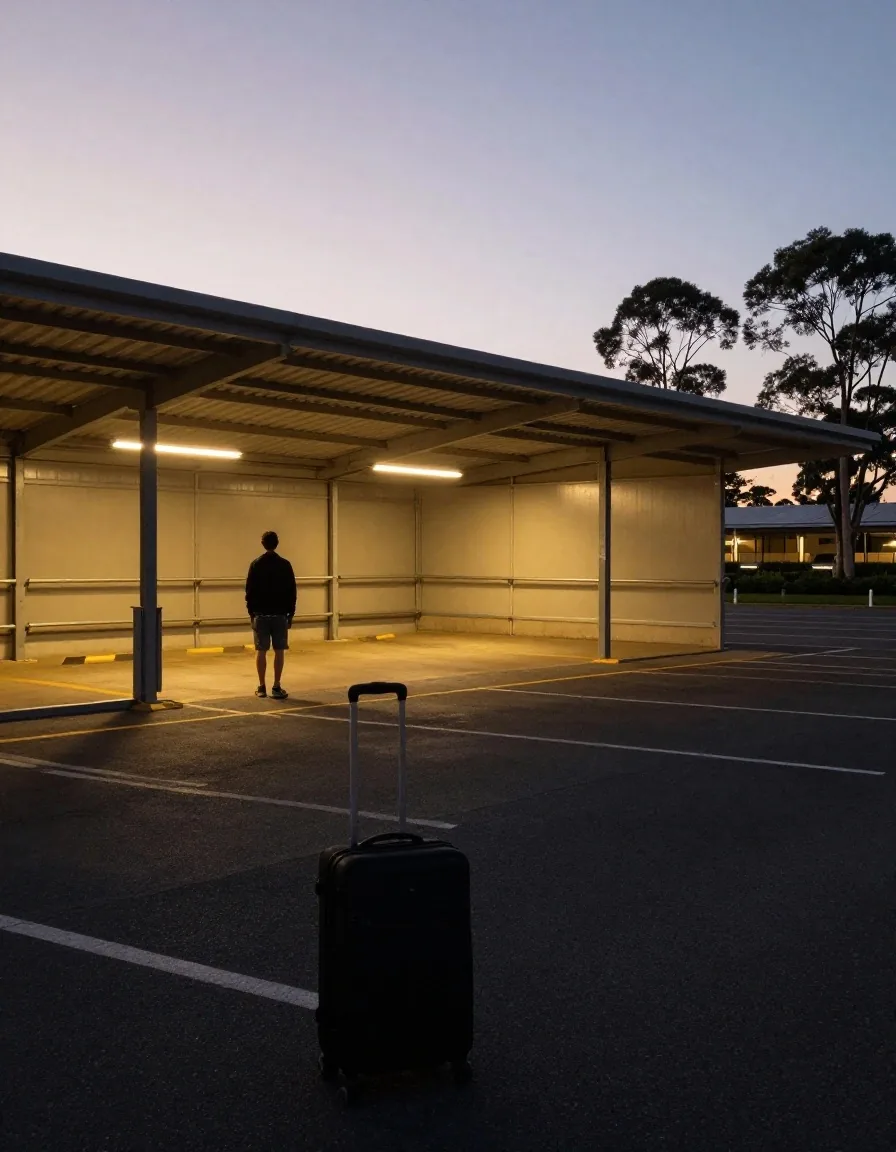
Your vehicle's registration plate, the entry and exit dates and times, and payment details. Some operators also ask for a mobile number for shuttle coordination and a flight number so they can track delays.
Flight number matters more than people expect on the return leg, because a delayed flight changes when you reach the pickup point. Have the airline and flight number handy — typing it in the booking form takes seconds; finding it at the car park barrier takes longer.
Vehicle height is worth checking too. Some undercover and covered bays have clearance limits, and over-height vehicles are often redirected to an open-air area that may not match the rate you originally booked.
- Registration plate (as printed on the vehicle)
- Entry and exit dates and times
- Payment card details
- Airline and flight number
- Mobile number for shuttle contact
Reading the Quote
Understanding the price you are quoted
The quoted price is usually for the whole booking period, not per day, and it is usually fixed once you pay. That is the advantage of pre-booking over the drive-up rate, which is calculated on exit and can climb sharply during peak demand.
Check whether the quote includes any booking fee and whether it changes if your plans shift. Read the cancellation terms at the same time, not after you have paid.
- Quoted price
- Whole booking period, fixed at payment
- Booking fee
- May be added at checkout — check before paying
- Drive-up rate
- Calculated on exit; often higher at peak
- Flexibility
- Flexible rates cost more but absorb date changes
- Refund
- Terms vary by operator — read before assuming
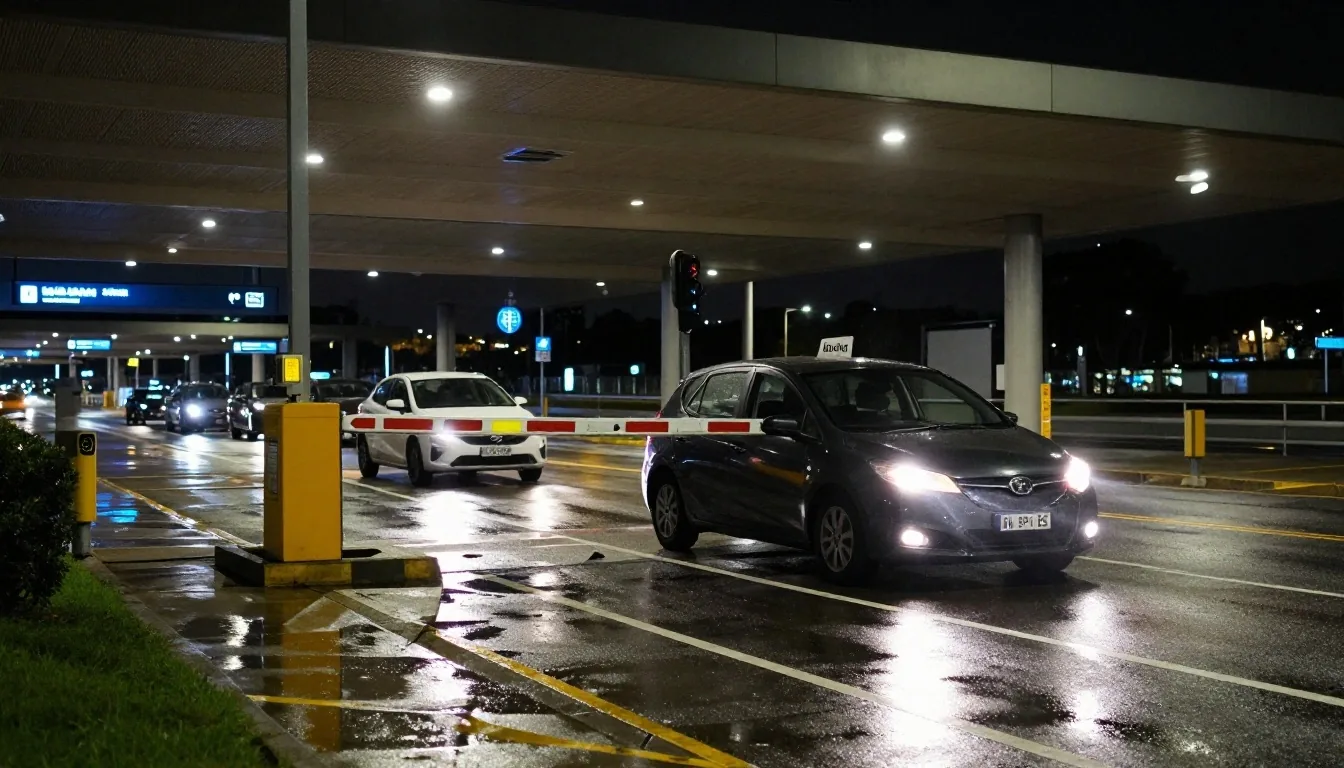
Entry: what happens at the barrier
At most car parks you drive to the entry lane, the barrier reads your booking reference or a QR code from your confirmation, and the barrier lifts. If the lane does not read it, there is usually an intercom or a staffed booth.
Keep the confirmation accessible on your phone and, ideally, printed. Some entry systems need the number typed rather than scanned, and a dead phone battery at the barrier is a genuinely annoying problem — especially after a long flight when you just want to get home.
If the barrier stays down, do not reverse into traffic. Press the intercom, quote your reference, and wait. Operators see this daily and it usually takes under a minute to resolve.
Parking on arrival
Follow the signs or staff directions to your allotted area. Note where you parked, because long-stay car parks are large and memory is unreliable after a long flight.
Take a photo of the bay marker and the nearest row sign. Take your luggage to the shuttle stop and allow for the walk. If you have not used the car park before, arriving 30 minutes earlier than you think necessary is the safe call.
Bays near the exit fill first. If you are offered a choice, a bay closer to the shuttle stop is usually worth the extra few rows of walking on the return leg, when tired legs and heavy bags make distance feel longer.
Return and pickup
On return, follow the operator's pickup instructions, which are usually in your confirmation email. Some car parks ask you to call when you land; others run a fixed loop you simply wait for.
Flight delays are common, so check whether the pickup service runs to a fixed schedule or responds to your call. Have the car park's contact number saved before you fly, not buried in an email you cannot load without signal.
If you land late and the shuttle has stopped running, most operators arrange a taxi voucher or a late-collection protocol. Knowing the number before you travel turns a difficult moment into a phone call.
Changing or cancelling a booking
Terms vary by operator. Some allow free changes up to a set time before entry; others do not. Cancellation policies range from full refunds to none at all, and long-stay bookings are often less flexible than short-stay ones.
Read the specific terms on the confirmation before you assume anything. If your plans are uncertain, a more flexible rate may be worth the extra cost — the difference is usually small compared to forfeiting a two-week booking because your dates shifted by a day.
Some operators let you amend dates through your account page; others require an email or a phone call. Note the method and the deadline alongside the booking reference, so a last-minute change does not become a phone scramble from the departure lounge.
Before You Drive Out
A pre-flight checklist
Everything on this list is small, and any one of them missed is the thing you remember about the trip. Run through it before you leave the house.
- Booking reference saved on your phone and on paper
- Car park address and entrance notes
- Return pickup instructions
- Car park contact number saved in your phone
- Height limit checked against your vehicle
- Valuables removed from the car
- Registration plate correct on the booking
- Terminal confirmed
Questions Travellers Ask
Booking questions, answered
Can I book parking on the day I travel?
You usually can, but drive-up rates are higher and popular car parks fill during peak periods. Booking ahead is cheaper and secures a space, particularly in school holidays and the December peak. If you are travelling at a busy time, booking even a day in advance often brings the rate down noticeably.
What if my flight is delayed and I return late?
Most car parks handle delayed returns, but the process varies. Confirm whether your booking's exit time can be adjusted and whether the shuttle runs at your new arrival hour, then contact the operator if needed. Some charge an overstay fee calculated on the hourly drive-up rate; others simply extend your booking until you collect the car.
Do I need to bring a printed confirmation?
It helps. Some entry barriers read a QR code from a screen, while others need the reference number. A printed copy also covers you if your phone battery dies or you have no signal at the car park — both of which happen more often than people expect at the end of a long trip.
Where to go next
Ready to choose a car park?
You now have the details booking forms ask for and the steps you meet at the barrier. Compare Melbourne airport parking options side by side, or read through the long-stay guide if your trip runs more than a few days. For anything still unclear, the FAQ covers the questions travellers ask most.